
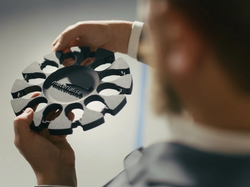
EOS will launch a new polymer powder bed fusion platform at Formnext 2026, opening November 17, and full specifications are still under wraps. Before that, some customers have evaluated the system under real production conditions. Materialise reports 44% higher productivity than the previous EOS platform and a reduction of more than six minutes in build time per part.
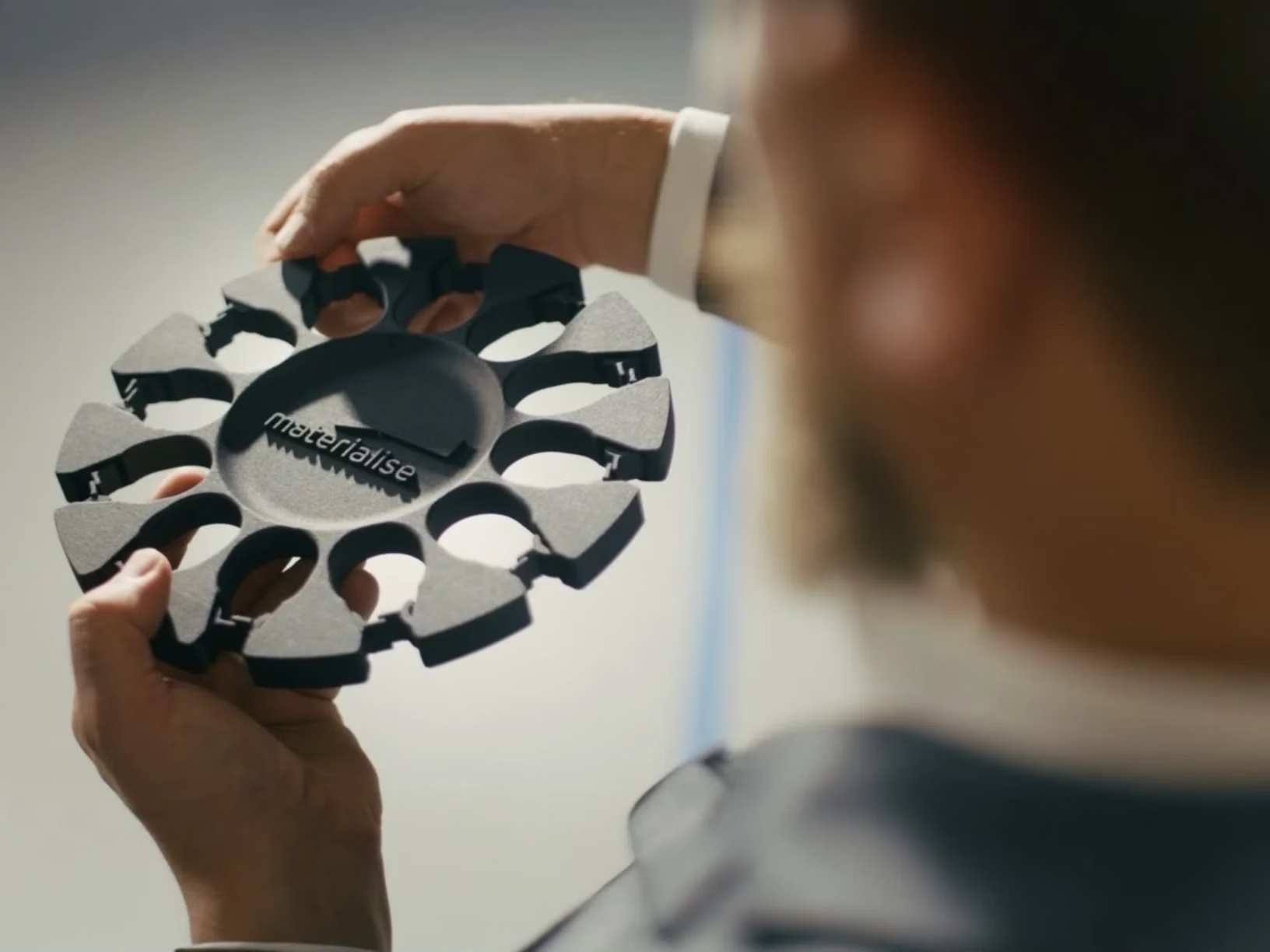
The part used in the evaluation was a cable twist wheel produced for Materialise's customer GKN Aerospace. The additive manufacturing service provider said it was not only checking whether the machine could print the part — it could — but also reliability, the effect of new features, productivity and efficiency, usability and control, and how easy post-processing would be.
Three platform characteristics have been disclosed: a three-laser architecture, intelligent laser utilization and dynamic load balancing. According to Giovanni Vleminckx, process engineering manager at Materialise, dynamic load balancing "maximizes output per build by equally balancing the exposure workload", and greater laser capacity translates directly into productivity. The system also offers extended process controls, so users can work with validated parameter sets or open them for alignment with specific applications and KPIs.
On the cable twist wheel, productivity rose 44% against the previous machine, with build time per part falling from 19:53 to 13:51 minutes. Post-processing changed as well: an advanced roller recoater produces a softer powder cake, making depowdering easier and reducing handling effort. "The soft powder cake is a very tangible improvement for our operators," Vleminckx said. "Parts are easier to unpack and depowder, which makes the overall workflow noticeably more efficient."
The platform will be shown at EOS's booth (hall 12, booth D71) at Formnext 2026. The three-laser architecture, the new recoater and open process controls are the confirmed changes; remaining specifications are expected at launch.
Source: reported by VoxelMatters on November 9, 2026; Materialise evaluation data.